

Introduction
In modern business environments, organizations are increasingly relying on data-driven approaches to improve speed, accuracy, and efficiency in decision-making. One of the most important technologies enabling this transformation is decision intelligence, which combines data science, artificial intelligence, and human judgment to guide better decisions. Within this framework, predictive analytics plays a critical role by forecasting future outcomes and helping organizations act proactively rather than reactively. Platforms like A2go.ai are helping businesses integrate predictive analytics into decision intelligence systems to unlock smarter and more reliable decision-making.
Understanding Decision Intelligence
Decision intelligence is a structured approach that improves how decisions are made by combining data, algorithms, and business context. Instead of focusing only on historical reporting, it connects insights directly to actions and outcomes. This allows organizations to understand what is happening, why it is happening, and what will likely happen next. By using decision intelligence, businesses can reduce uncertainty and improve performance across all levels of operations.
What Is Predictive Analytics in Business Context
Predictive analytics is a branch of data science that uses historical and real-time data to predict future events. It applies statistical models, machine learning, and AI techniques to identify patterns and trends. Businesses use predictive analytics to forecast customer behavior, demand fluctuations, risks, and operational performance. When integrated with decision intelligence, it becomes a powerful tool for guiding strategic and operational decisions.
The Relationship Between Predictive Analytics and Decision Intelligence
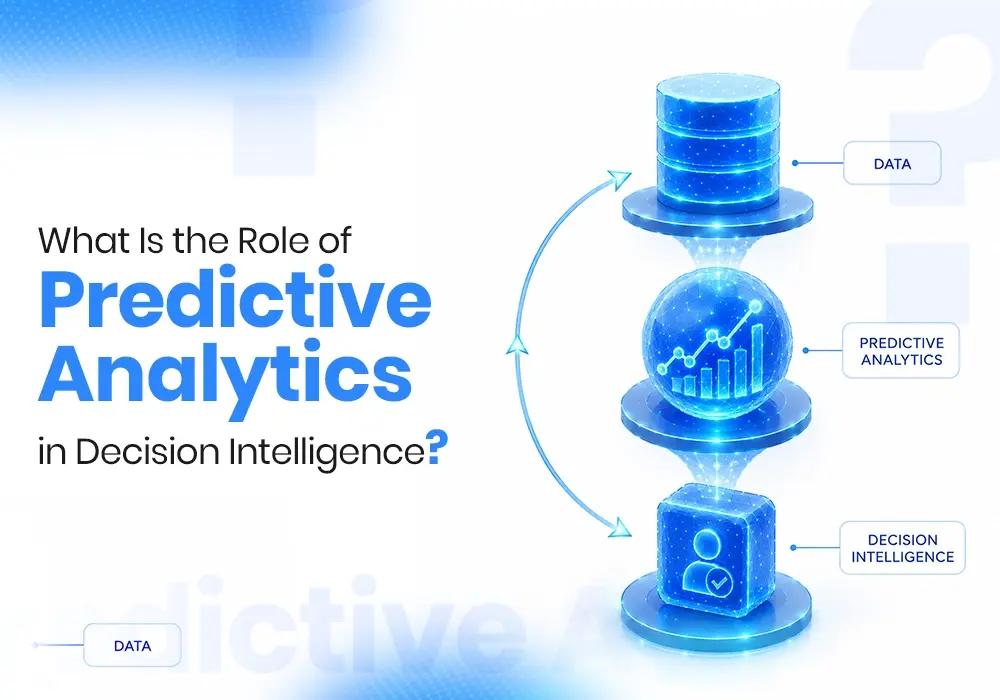
Predictive analytics is a core component of decision intelligence. While predictive analytics focuses on forecasting future outcomes, decision intelligence uses those forecasts to recommend actions. In simple terms, predictive analytics tells what is likely to happen, while decision intelligence explains what should be done about it. Together, they create a complete decision-making system that is both intelligent and action-oriented. Solutions like A2go.ai integrate both capabilities into a unified platform for better business outcomes.
Improving Forecast Accuracy for Better Decisions
One of the most important contributions of predictive analytics to decision intelligence is improved forecasting accuracy. By analyzing historical data and identifying patterns, predictive models can forecast future trends with greater precision. This helps organizations make better decisions related to sales planning, demand forecasting, budgeting, and resource allocation. More accurate forecasts reduce uncertainty and allow businesses to plan more effectively.
Enhancing Customer Behavior Prediction
Understanding customer behavior is essential for business success. Predictive analytics helps organizations anticipate customer actions such as purchases, churn, and engagement levels. When integrated with decision intelligence, these insights are used to design targeted marketing campaigns, improve customer experience, and increase retention rates. Businesses using A2go.ai can leverage these predictive insights to deliver more personalized and effective customer strategies.
Strengthening Risk Identification and Management
Risk management is a key area where predictive analytics significantly enhances decision intelligence. Predictive models can detect early warning signs of financial, operational, and market risks. This allows organizations to respond proactively before problems escalate. Decision intelligence uses these predictions to recommend mitigation strategies and reduce potential losses. This combination improves organizational resilience in uncertain environments.
Supporting Supply Chain Optimization
Supply chains are complex systems influenced by many unpredictable factors. Predictive analytics helps forecast demand changes, supplier performance issues, and logistical disruptions. When combined with decision intelligence, these predictions are used to optimize inventory levels, improve delivery schedules, and reduce operational costs. Platforms like A2go.ai enable businesses to create more efficient and responsive supply chain systems.
Improving Financial Planning and Budgeting
Financial decision-making becomes more accurate when predictive analytics is integrated into decision intelligence systems. Businesses can forecast revenue, expenses, and cash flow based on historical trends and market conditions. This helps finance teams create more realistic budgets and investment plans. It also supports better risk assessment and financial stability over the long term.
Enabling Proactive Decision-Making
Traditional decision-making is often reactive, meaning organizations respond after events occur. Predictive analytics enables a shift toward proactive decision-making. By forecasting future outcomes, businesses can take preventive actions before issues arise. Decision intelligence uses these predictions to guide leaders toward the best possible actions, improving efficiency and reducing risks.
Enhancing Operational Efficiency
Operational efficiency is improved when predictive analytics is used to anticipate system performance and resource needs. Organizations can predict equipment failures, workforce requirements, and production bottlenecks. Decision intelligence then uses this information to optimize operations and reduce downtime. This leads to cost savings and improved productivity across the organization.
Supporting Marketing and Sales Strategies
Predictive analytics plays a major role in improving marketing and sales performance. It helps identify high-value customers, forecast campaign results, and determine optimal pricing strategies. When combined with decision intelligence, these insights are used to design more effective marketing campaigns and sales strategies. Businesses using A2go.ai can better align marketing efforts with customer needs and market demand.
Reducing Human Bias in Decision-Making
Human decision-making often involves bias, assumptions, and incomplete information. Predictive analytics reduces this issue by providing data-driven forecasts based on objective models. Decision intelligence then uses these unbiased predictions to guide decisions. This results in more consistent, accurate, and transparent decision-making processes across the organization.
Real-Time Predictive Decision Support
Modern businesses require real-time insights to stay competitive. Predictive analytics now operates in real time by continuously analyzing incoming data streams. Decision intelligence uses these real-time predictions to support immediate decision-making. This is especially important in areas such as fraud detection, dynamic pricing, and supply chain management.
Improving Strategic Planning
Strategic planning becomes more effective when predictive analytics is integrated into decision intelligence. Organizations can simulate different scenarios and evaluate potential outcomes before making long-term decisions. This helps leaders choose strategies that are more likely to succeed while minimizing risk. It also improves alignment between short-term actions and long-term goals.
The Role of AI in Predictive Decision Systems
Artificial intelligence enhances both predictive analytics and decision intelligence by improving model accuracy and learning capabilities. AI algorithms continuously refine predictions based on new data, making insights more reliable over time. In combination with decision intelligence, AI ensures that predictions are not only accurate but also actionable.
The Importance of Platforms Like A2go.ai
Platforms such as A2go.ai play a key role in integrating predictive analytics into decision intelligence systems. They provide businesses with tools to collect data, generate predictions, and convert insights into actionable decisions. This simplifies implementation and ensures that organizations can fully benefit from advanced analytics without technical complexity.
The Future of Predictive Analytics in Decision Intelligence
The future of decision intelligence will be heavily driven by advancements in predictive analytics. As AI becomes more powerful, predictive models will become more accurate and capable of handling complex scenarios. This will enable fully automated decision systems that can operate in real time across multiple business functions. Organizations that adopt these technologies early will gain a strong competitive advantage.
Conclusion
Predictive analytics is a foundational component of decision intelligence, enabling organizations to forecast future outcomes and make proactive, data-driven decisions. By improving accuracy, reducing risk, and enhancing operational efficiency, predictive analytics strengthens every aspect of business decision-making. With platforms like A2go.ai, organizations can seamlessly integrate predictive analytics into decision intelligence initiatives and unlock more intelligent, faster, and more effective decision-making processes.